
The problem: the threat of Phelipanche ramosa
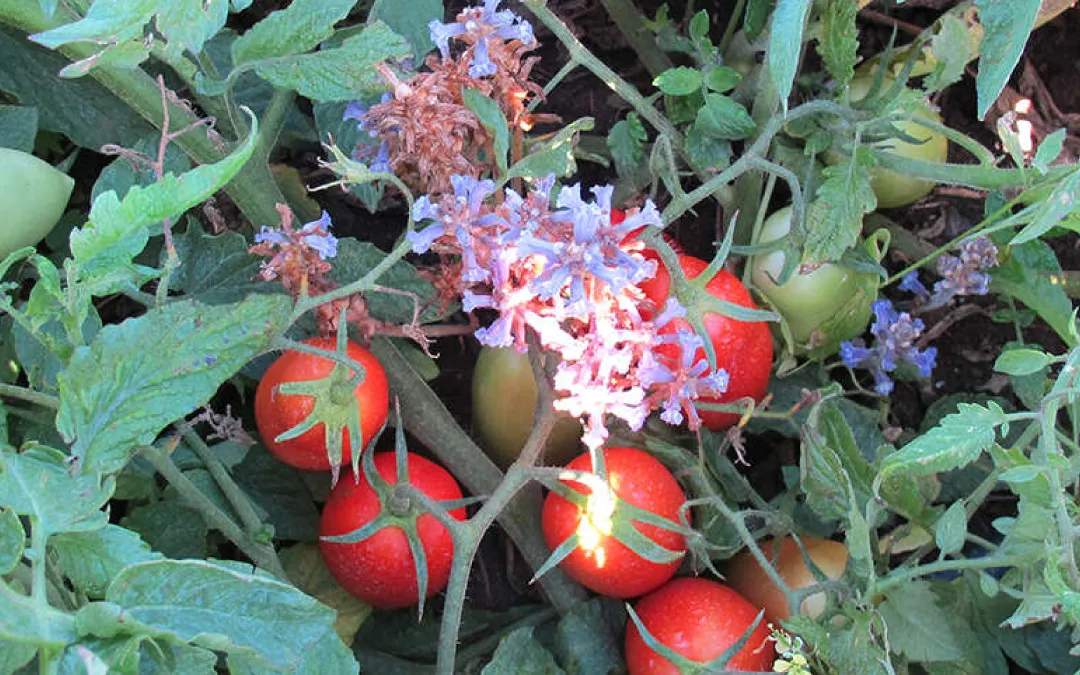
Processing tomato is a key crop for the agricultural economy of southern Italy, especially in Puglia. However, in recent years the crop has been threatened by Phelipanche ramosa (known as “sporchia” or “succiamele”), a parasite that attaches itself to tomato roots, drawing off water and nutrients. This weed causes yield losses of up to 70-80% if the attack occurs in the early stages of growth, as well as reducing fruit quality (up to 30% lower refractometric index).
P. ramosa affects not only tomato but also other crops such as aubergines, peppers, cauliflowers and wild species, making it urgent to adopt sustainable strategies to counter it.
The solution: biostimulants and organo-mineral fertilisers
Research carried out by the DAFNE team tested the effectiveness of biostimulants and organo-mineral fertilisers in improving plant resistance and increasing yield. Two field trials (2021 and 2023) gave promising results:
Trial A (2021): foliar application of Radicon®
Tested soils: Two fields with different fertility (low vs. high).
Results:
Yield increase: +16.1% in the less fertile soil, +6.8% in the more fertile one.
Better photosynthetic activity: Higher SPAD index in the treated plants.
Fruit quality: Slight increase in dry matter and lycopene.
Trial B (2023): fertigation with biostimulants
Products tested: Futuroot®, Radicon® and Radicon® + Amifort-Plus®.
Results:
Yield increase:
Futuroot®: +27.8%
Radicon®: +13.5%
Radicon® + Amifort-Plus®: +27.7%
Fruit weight: Higher in the treatments than in the control.
Plant biomass: Increased with the use of biostimulants.
Conclusions: which strategies to adopt?
Biostimulants based on humic acids (such as Radicon®) are effective, especially in low-fertility soils.
Combined fertigation (e.g. Radicon® + Amifort-Plus®) gives superior results, thanks to micronutrients such as zinc, manganese and magnesium.
Foliar application vs. fertigation: The former ensures greater yield increases.
Practical implications for farmers
Poor soils: The use of biostimulants can make up for nutritional deficiencies, increasing yield by up to 27%.
Crop quality: Even without significant differences in sugar parameters, the fruit is more substantial and richer in lycopene.
Integration with other techniques:
Rotation with non-host crops (e.g. cereals).
Deep soil tillage (up to 50 cm) to reduce the shoots of P. ramosa.
Use of resistant cultivars developed with TILLING technology.
Integrated control: not just chemistry
For sustainable management of P. ramosa, it is essential to combine several approaches:
Antagonistic microorganisms: Such as Fusarium spp. and Glomus spp.
Activated compost: Enriched with fungi to reduce germination of the parasite.
Constant monitoring: Timely, localised interventions to minimise costs and environmental impact.
Scientific references
The trials cited were published in international journals such as Plants (2024) and Agronomy, confirming the effectiveness of the approaches proposed.
In summary: Combating Phelipanche ramosa requires a mix of innovation and traditional practices. With the right biostimulants and careful soil management, farmers in Puglia can protect processing tomato, keeping quality and market competitiveness high.
For further details on the techniques or products mentioned, contact the DAFNE research team.