Effect of different methods for the control of the parasitic plant Phelipanche ramosa (L.) Pomel in tomato cultivation.
Experimental study on agronomic, chemical and biological methods to control Phelipanche ramosa in tomato cultivation in Puglia.
Abstract
Phelipanche ramosa is one of the most damaging parasitic plants to numerous crops. In semi-arid soils, this infestation is favoured by the high seed production (up to 500,000 per plant), and the seeds can remain viable in the soil for up to 20 years. This study, carried out at the University of Foggia, evaluated 13 control methods (agronomic, chemical and biological) on tomato seedlings grown in infested soils. The results show that no method is completely effective on its own, but some treatments, such as the use of the biostimulant Radicon, compost activated with Fusarium, nitrogen and sulphur fertilisers, and resistant tomato varieties, significantly reduced the number of shoots of the parasitic plant.
Introduction
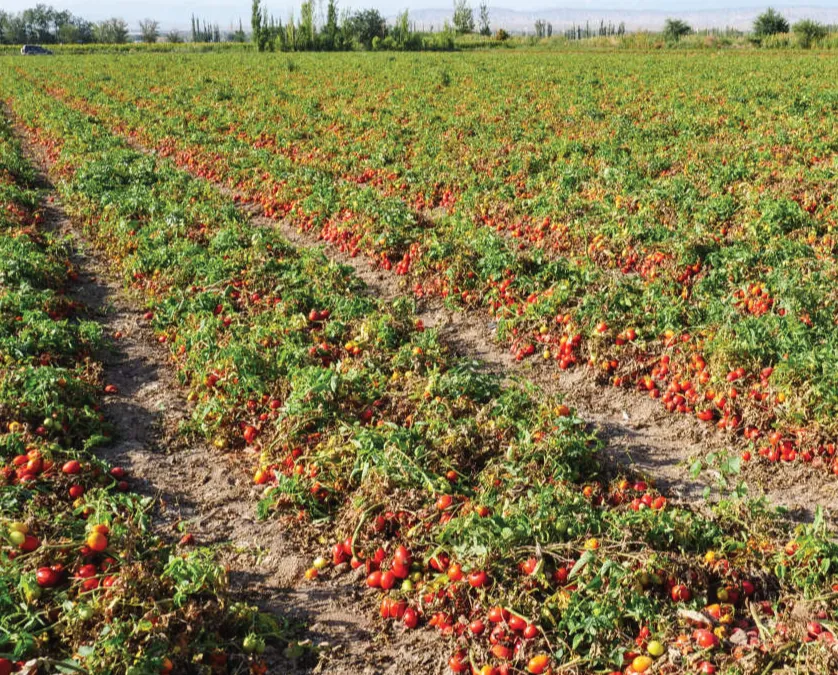
Phelipanche ramosa is a root parasite that causes severe damage to crops, particularly in Puglia. Parasitised tomato plants show stunted growth and a reduction in yield, caused by the parasite’s uptake of nutrients and water. Several studies have tested physical, chemical and biological control methods, but none has proved completely effective. An integrated approach is therefore needed to keep parasite populations below the economic damage threshold.
Materials and methods
The experiment was carried out in 2014 at the University of Foggia. The tomato seedlings (cv ‘Docet’) were transplanted into pots containing heavily infested soils.
A total of 13 different treatments were used, including:
1 Compost inoculated with Fusarium spp.
2 Olive mill wastewater
3 Organic fertilisers (e.g. SUMUS)
4 Radicon biostimulant
5 Resistant tomato varieties
6 Elemental sulphur
7 Nitrogen fertiliser
8 Enzone fumigant
The infestation was assessed by counting the P. ramosa shoots that emerged at different times in the crop cycle.
Results and discussion
P. ramosa shoots emerged from 53 days after transplanting (DAT). Among the treatments, the best results in terms of shoot reduction were obtained with:
Radicon biostimulant: 61.3% reduction
Compost activated with Fusarium: 59.9% reduction
Nitrogen fertiliser: 49.0% reduction
Elemental sulphur: 44.5% reduction
Resistant tomato variety (‘Red Setter’)
The Radicon treatment showed a positive impact on the reduction of parasite seeds, probably because of physiological alterations in the germinating seeds. Nitrogen and sulphur fertilisers inhibited seed germination, confirming results obtained in previous studies on other crops.
Conclusions
No single method can guarantee complete control of Phelipanche ramosa. However, some agronomic and biological treatments, such as the application of Radicon, fertilisers and activated compost, can be combined for a progressive reduction of the parasite. These approaches are also suitable for organic farming systems and require further investigation to optimise their effectiveness.